Manuele Fior
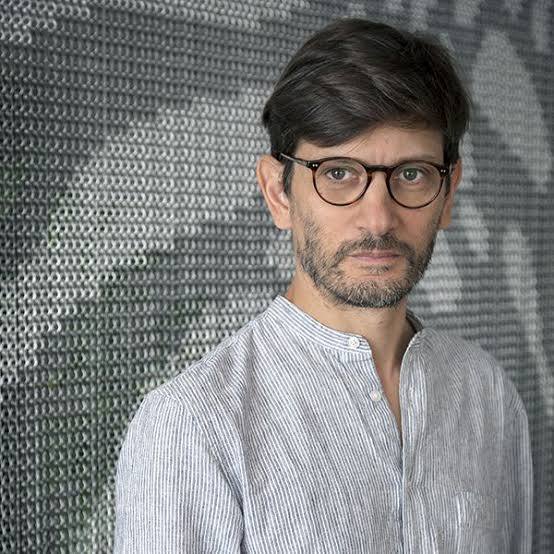
Manuele Fior is an internationally renowned artist and one of the most popular comic book artists in Italy and abroad. Born in Cesena in 1975, after graduating in architecture he moved to Berlin, where he worked as a comic book artist, illustrator, and architect. In 1994, he won first prize at the "Bienal do Juvenes Criadores do Mediteraneo" in Lisbon. In 2001, he began collaborating with Avant-Verlag, the German publisher of the magazine "Plaque," which features Italian authors such as Mattotti, Igort, and Giandelli. From there, he began working on his own graphic novels, written by his brother Daniel, which were later published in "Black," "Bile Noire," "Stripburger," "Forresten," and "Osmosa." He has since lived in Oslo, Paris, and Venice.
His illustrations have appeared in magazines such as The New Yorker and Vanity Fair, newspapers such as La Repubblica, Le Monde, and Il Sole 24 Ore, and publishing houses such as Feltrinelli, Einaudi, and EL.
His graphic novel Cinquemila chilometri al secondo (Coconino Press 2010) won the Fauve d'Or Award for Best Album at the 2011 Angoulême International Comics Festival. He has also published L'intervista (Coconino Press 2013, Oblomov 2019), Le variazioni d'Orsay (Coconino Press 2015), I giorni della merla (Coconino Press 2016), La signorina Else (Coconino Press 2009), and Rosso Oltremare (Coconino Press 2006).
Celestia, published in 2020 by Oblomov Edizioni, won the Yellow Kid Author of the Year Award at the Lucca Comics Awards. His latest graphic novel Hypericon was released in 2022 by Coconino Press.
DAS - Dispositivo Arti Sperimentali
AN ARTIST’S JOURNEY IN TWENTY IMAGES
with Manuele Fior, Martina Sarritzu
Manuele Fior and Martina Sarritzu open up their personal visual atlases, sharing ten images each that have shaped the way they look at the world and the way they draw.
DAS - Dispositivo Arti Sperimentali
TAKING A STAND
with Manuele Fior, Lisa Blumen, Rita Petruccioli
chair Rodolfo Dal Canto
Lisa Blumen, Manuele Fior, and Rita Petruccioli explore the relationship between fiction and reality, the use of genres, and adaptation as tools for addressing the tensions of our time—from the environmental crisis and gender conflicts to social and political rifts. A round table discussion on how stories, even when fictional, can serve as a space to examine the present and take a stand.